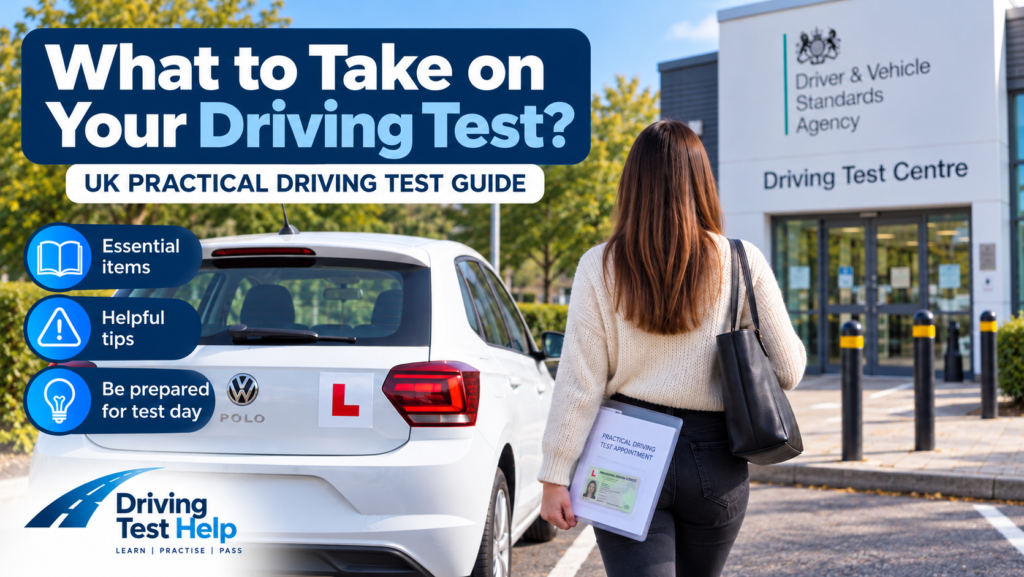
Your driving test is booked, you’ve been practising, and test day is getting closer. But what do you actually need to take with you?
The good news is that the list is fairly short. There are a few things you must have, and a few others that are useful to have with you on the day.
Here’s everything you need to know about what to take on your driving test.
What do you need to take on your driving test?
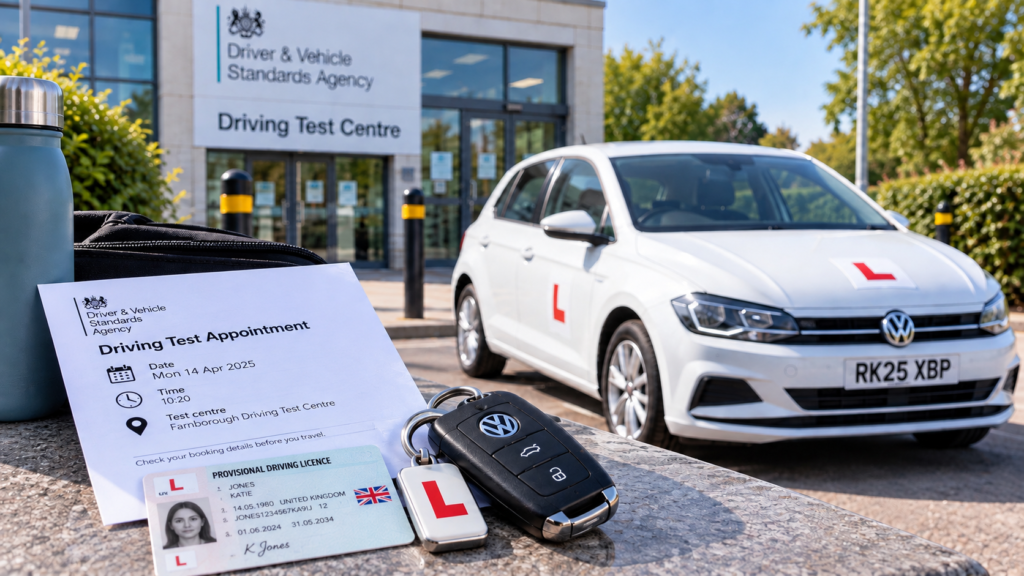
For a standard UK car driving test, GOV.UK says you must take:
- Your UK driving licence
- Your theory test pass certificate, if you have it
- A suitable car for the test
1. Your driving licence
If you don’t take the required items, your test can be cancelled and you may not get your test fee back.
Let’s look at each one in more detail.
Your driving licence is the most important thing to remember.
If you have a photocard licence, take it with you to the test centre.
Make sure the photograph still looks like you. You don’t need to replace your licence just because you’ve changed your hairstyle or your appearance slightly, but you must be recognisable from the photograph.
What if you’ve lost your driving licence?
If you’ve lost your licence before your test, you’ll need to apply for a replacement.
A replacement can take up to 15 days to arrive, so don’t leave this until the last minute. If your new licence won’t arrive in time, you’ll need to rearrange your test.
What if you don’t have a photocard licence?
If you have a paper driving licence, you’ll need to bring your valid passport as well as your paper licence.
2. Your theory test pass certificate
GOV.UK says you should take your theory test pass certificate if you have it.
However, don’t panic if you’ve lost it.
You do not need to get a replacement certificate. The examiner can check that you’ve passed your theory test before your practical test starts.
So, if you’ve still got your certificate, pop it in your bag. If you haven’t, there’s no need to order another one.
3. The car you’re taking your test in
You need to have a suitable car available for your driving test. Most learners take their test in their driving instructor’s car, but you can use your own car if it meets the DVSA’s requirements.
If you’re using your instructor’s car, they’ll normally make sure everything is ready for the test.
Using your own car for the driving test
If you’re using your own car, there’s quite a bit more to check. Find out exactly what your car needs to meet the driving test requirements.
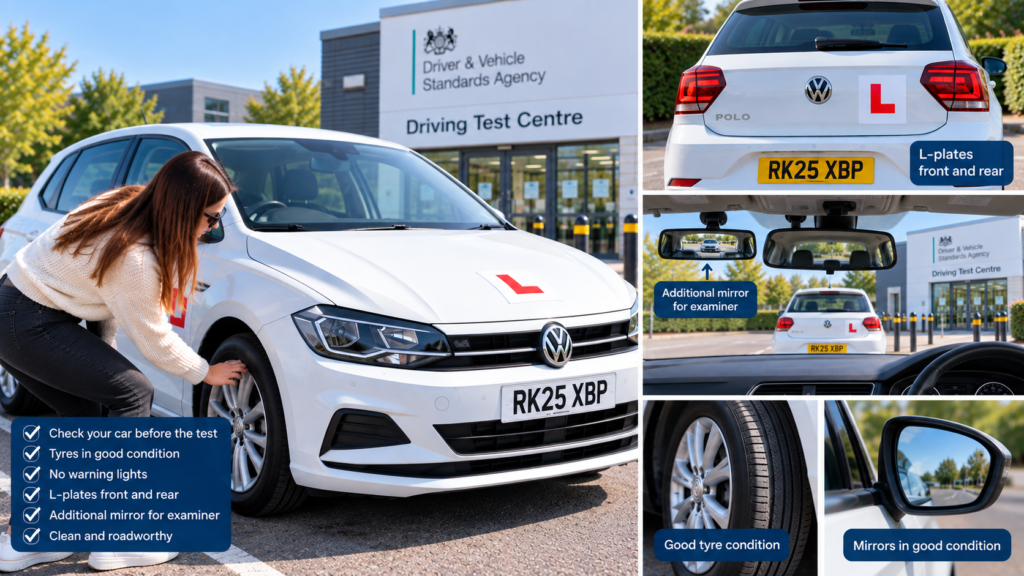
Your car must meet specific safety and legal requirements.
It must:
- Be roadworthy
- Have no relevant safety warning lights showing
- Have legal, undamaged tyres
- Have an extra interior rear-view mirror for the examiner
- Have a passenger seatbelt and suitable passenger head restraint
- Be capable of reaching at least 62mph
- Have an officially fitted mph speedometer
- Display L-plates on the front and rear
- Have four wheels
- Have a maximum authorised mass of no more than 3,500kg
- Be taxed
- Have a current MOT if it is more than three years old
- Be insured for the driving test
There are also rules about certain types of cars and vehicle features, so if you’re planning to use your own car, check the full using your own car for your test requirements before test day.
If you normally wear glasses or contact lenses when driving, make sure you have them with you.
You’ll have an eyesight check before the driving part of your test. You’ll need to read a vehicle registration number from the required distance, using your glasses or contact lenses if you normally need them for driving.
It’s a very simple thing to forget when you’re concentrating on everything else, so put your glasses or contact lenses somewhere you’ll remember them.
Do you need to take your booking confirmation?
No.
You do not need to take your driving test booking confirmation with you. GOV.UK specifically confirms that you do not need to bring it to the test.
It’s still sensible to check your booking details before leaving home, particularly the date, time and test centre address.
What else should you take?
There isn’t a long list of compulsory equipment, but a few everyday things can make the day easier.
You might want to take:
- Your glasses or contact lenses, if you need them for driving
- A bottle of water
- A light snack if you’re likely to be hungry
- Tissues
- Anything you normally carry for your lessons
You don’t need to arrive carrying a suitcase worthy of a weekend away. The important thing is having the essentials sorted.
Before you leave home
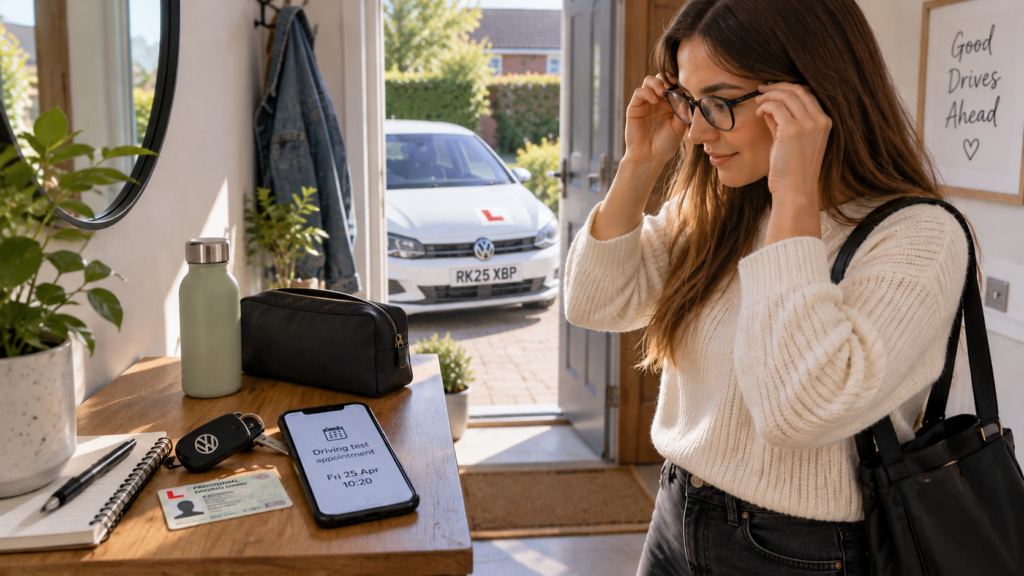
Give yourself a few minutes to run through a simple checklist.
Driving test day checklist
☐ Driving licence
☐ Theory test pass certificate, if you have it
☐ Suitable test car
☐ Glasses or contact lenses, if needed
☐ Check the test centre address and appointment time
☐ If using your own car, check that it meets all the DVSA requirements
☐ Leave enough time to arrive without rushing
If you’re using your instructor’s car, they’ll normally deal with the vehicle checks. If you’re using your own car, don’t assume everything is fine just because you’ve driven it recently. Check it before test day.
What happens when you arrive at the test centre?
Once you’ve arrived, you’ll meet your examiner and they’ll check the necessary details before the test begins.
You’ll have an eyesight check, followed by the “tell me” vehicle safety question. You’ll then start the driving part of your test, including general driving, independent driving and one reversing exercise.
If you want to know exactly what happens from the moment you arrive until you receive your result, read our guide to what happens on a driving test.
What if you forget something?
The important thing is not to discover the problem when you’re already sitting outside the test centre.
If you’ve lost your driving licence, deal with it as soon as possible because you may need to apply for a replacement and rearrange your test. If you’ve lost your theory test certificate, that’s much less of a problem because the examiner can check your theory pass.
And if you’re using your own car, make sure you’ve checked the vehicle requirements well before test day. If the car doesn’t meet the rules, your test can be cancelled and you may have to pay again.
Putting it all together
For most learners, what to take on your driving test is actually quite simple.
Take your driving licence, take your theory pass certificate if you still have it, and make sure you have a suitable car. If you wear glasses or contact lenses for driving, don’t forget those either.
Then give yourself plenty of time to get to the test centre, take a breath, and concentrate on the driving you’ve been practising.
Once you’ve got the practical things sorted, you can focus on the bit that really matters: showing the examiner that you can drive safely and independently.
Ready for test day?
Before you go, have a look at our Driving Test Checklist for a final run-through of the things worth checking before your test.
And if you’re still wondering exactly what the test itself involves, read What Happens on a Driving Test?