Your driving test is much easier to face when you know exactly what to expect.
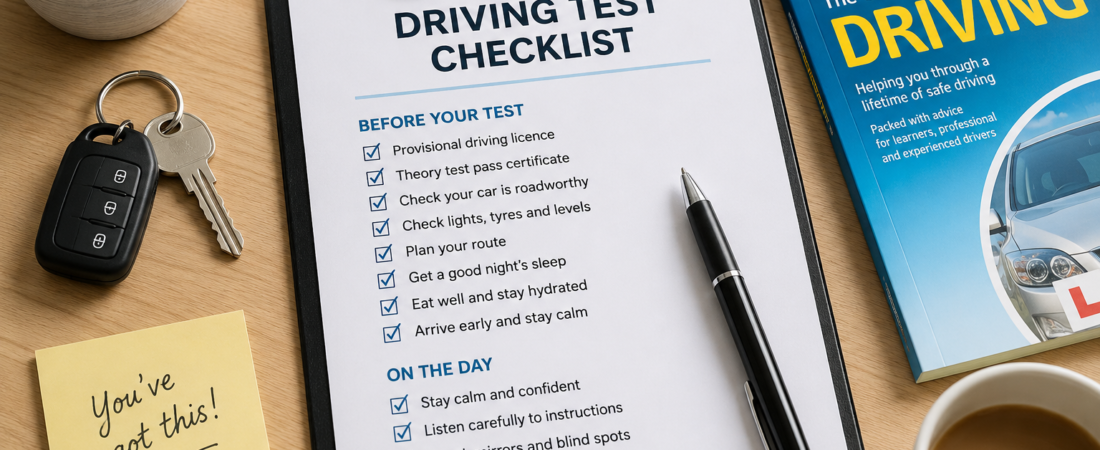
There is a lot to think about before test day, from your licence and car to manoeuvres, independent driving and the show me, tell me questions. Having a simple driving test checklist can help you make sure nothing important gets forgotten.
This guide takes you through the key things to check before your UK practical driving test, including what to bring, what to practise and what happens on the day.
Driving test checklist: before you book your test
Before booking your practical test, you should be confident that your driving is consistently at test standard.
If you’re still unsure whether you’re ready, our Am I Ready For My Driving Test? guide can help you assess the key areas before booking, and if you’re wondering what to expect on the day read our What Happens On A Driving Test guide.
Your instructor should be able to help you judge whether you’re ready. A good sign is that you can drive safely and independently without needing regular prompts.
Before booking, make sure you have:
- A valid provisional driving licence
- Passed your car theory test
- Enough experience driving in different road and traffic conditions
- Practised all the required manoeuvres
- Practised independent driving
- Practised the show me, tell me questions
- Experience dealing with situations that don’t go exactly as planned
Passing your theory test is a requirement before you can take the practical test.
Don’t worry about being absolutely perfect. The driving test isn’t looking for a flawless drive. You’re allowed to make driving faults, provided you don’t accumulate more than 15 and don’t make a serious or dangerous fault.
Driving test checklist: a few days before
As your test gets closer, it’s worth switching from simply doing lessons to deliberately preparing for the test itself.
Practise without prompts
One of the biggest things to check is whether you can make decisions without your instructor helping you.
Practise:
- Choosing safe gaps at junctions
- Reading road signs
- Changing lanes
- Selecting the correct lane at roundabouts
- Responding to hazards
- Following directions
- Making independent decisions
- Recovering calmly if you make a mistake
Your examiner won’t expect you to know the test route. In fact, driving test routes are not published by the DVSA.
The important thing is being able to deal with unfamiliar roads confidently.
Practise different types of roads
Don’t spend all your practice driving around the roads closest to your test centre.
A good driving test checklist should include different environments, such as:
- Busy town centres
- Residential roads
- Dual carriageways
- Rural roads
- Multi-lane roundabouts
- One-way systems
- Roads with parked vehicles
- Areas with pedestrians and cyclists
The aim is to become adaptable rather than memorising particular roads.
Practise your manoeuvres
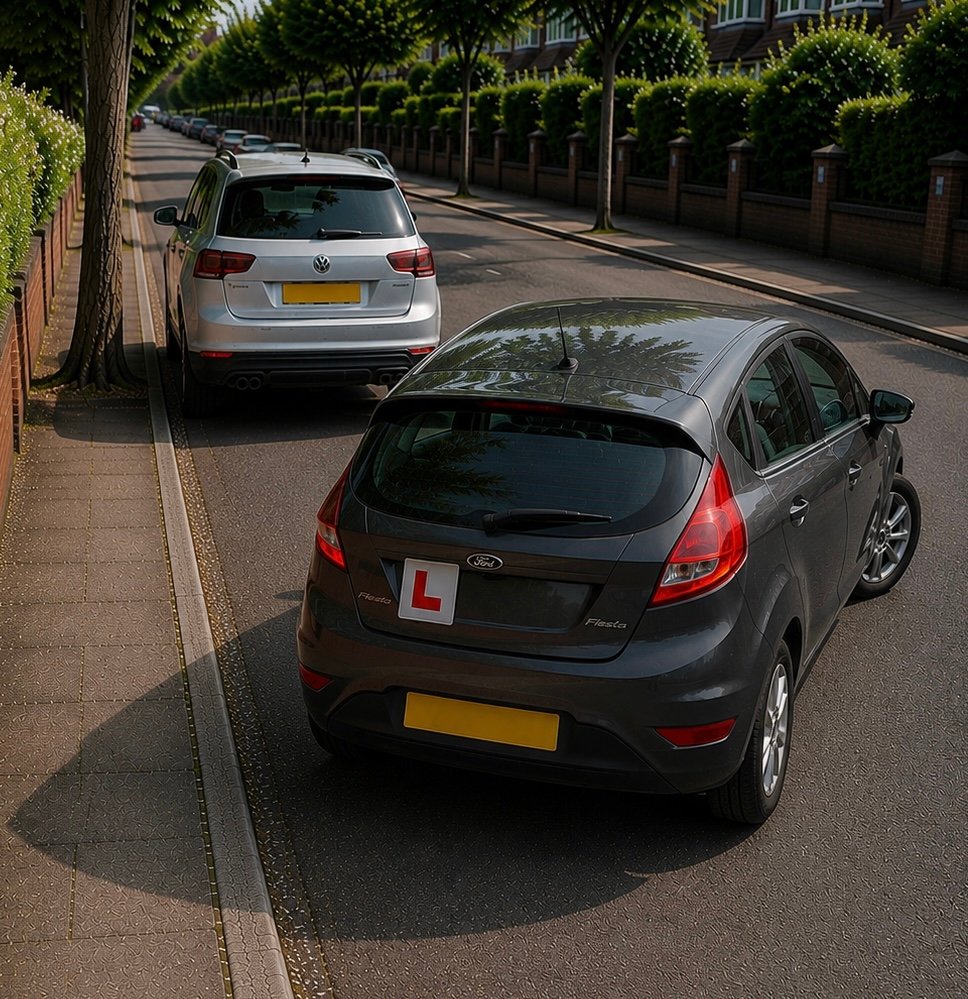
You won’t know exactly which reversing exercise you’ll be asked to do, so make sure you’re comfortable with all three possibilities.
The examiner can ask you to:
- Parallel park
- Reverse into or drive into a parking bay, depending on the exercise
- Pull up on the right, reverse for around two car lengths and rejoin the traffic
You can practise each manoeuvre using our individual guides to parallel parking, bay parking and pulling up on the right and reversing.
You won’t necessarily be asked to perform every manoeuvre. One reversing exercise is selected during the test.
Practise the manoeuvres until you can concentrate on observation and safety rather than simply remembering the steps.
Driving test checklist: practise the show me, tell me questions
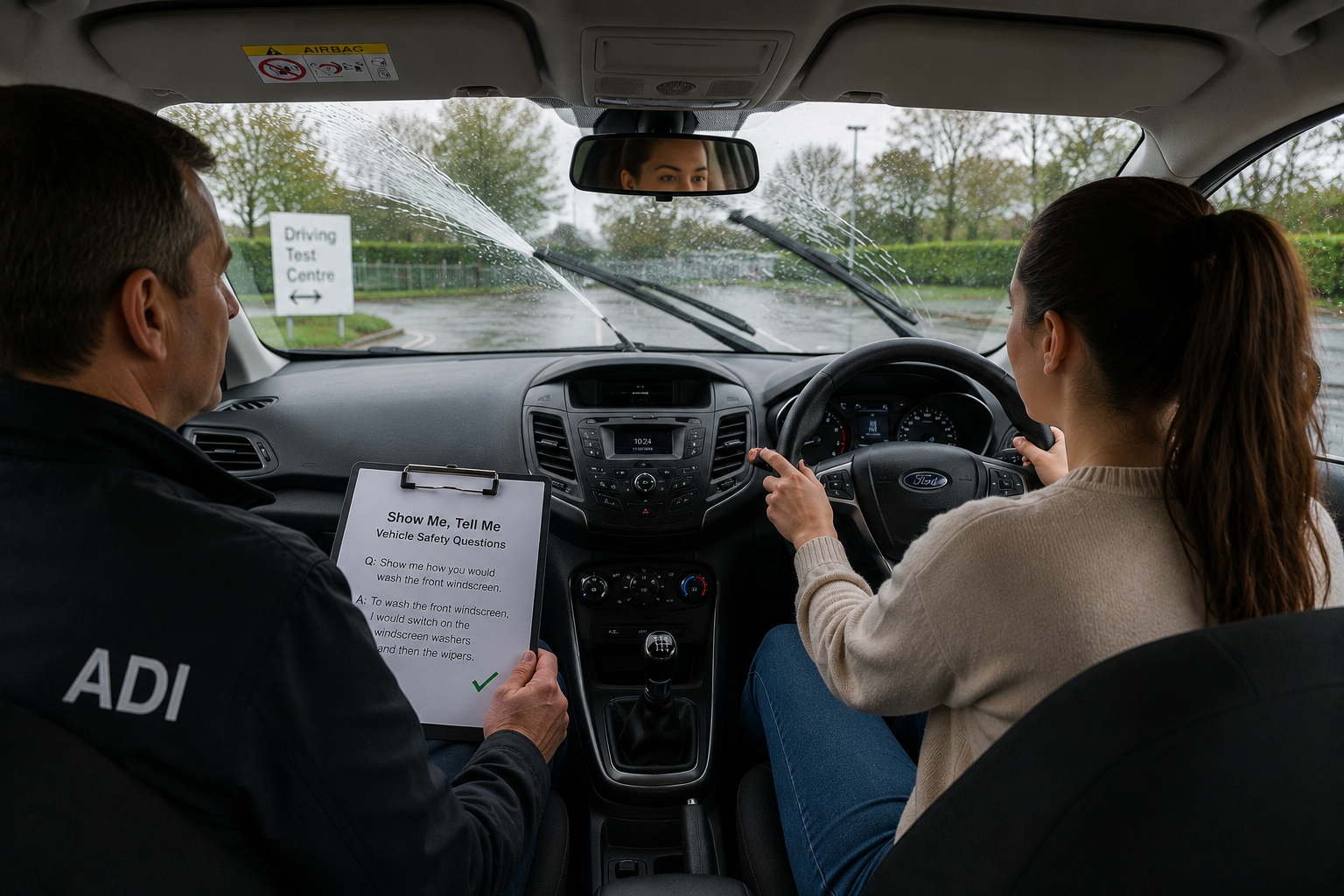
You’ll be asked two vehicle safety questions during the test.
The tell me question comes before you start driving. You’ll need to explain how you would carry out a vehicle safety check.
The show me question happens while you’re driving. You’ll need to demonstrate a safety task when the examiner asks you to.
You should know the questions and answers before test day.
Getting one or both questions wrong normally results in a driving fault. However, if your driving becomes dangerous while answering the show me question, that can result in a more serious fault.
Practise these until you can explain or demonstrate them confidently without having to think too hard about the procedure.
You can practise all of them in our complete Show Me Tell Me Questions guide.
Driving test checklist: check your eyesight
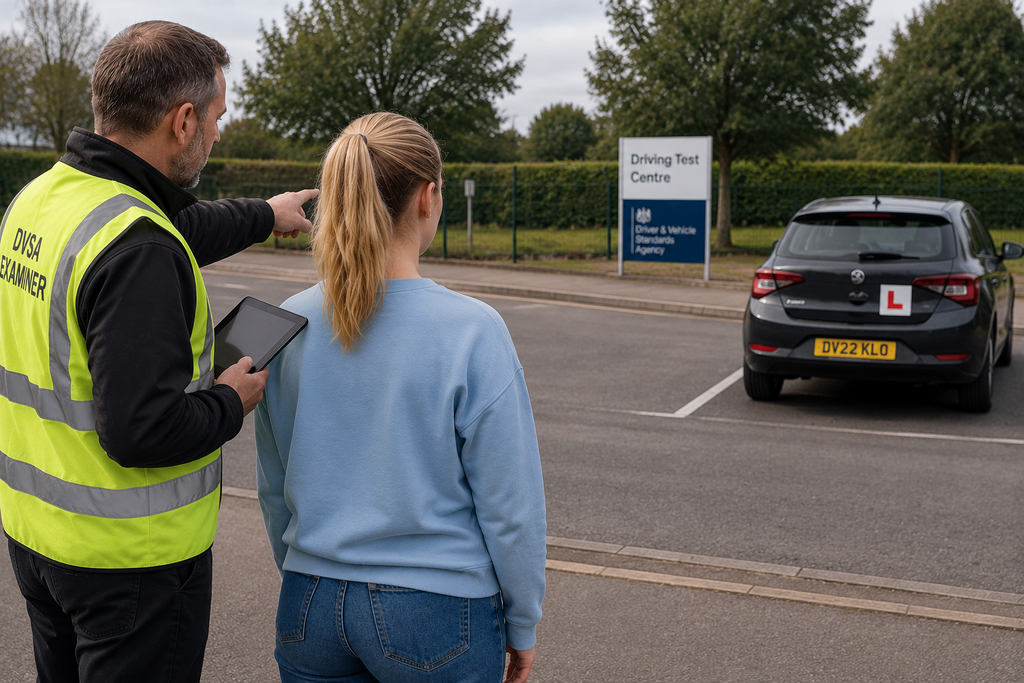
You need to be able to meet the eyesight requirement before you can take your test.
At the beginning of the test, you’ll be asked to read a number plate from the required distance.
For a new-style number plate, the distance is 20 metres. For an old-style number plate, it’s 20.5 metres.
If you fail the eyesight check, the driving test ends.
If you wear glasses or contact lenses for driving, make sure you have them with you and are comfortable wearing them for the test.
It’s worth checking your eyesight beforehand rather than discovering a problem when you arrive at the test centre.
Driving test checklist: what to bring to your driving test
Before leaving home on test day, check that you have your driving licence.
It’s also sensible to have your theory test details available, although you don’t need to obtain a replacement theory test certificate if you’ve lost it. The examiner can check that you’ve passed your theory test.
Find out exactly what to take with you on test day in our What To Take On Your Driving Test guide.
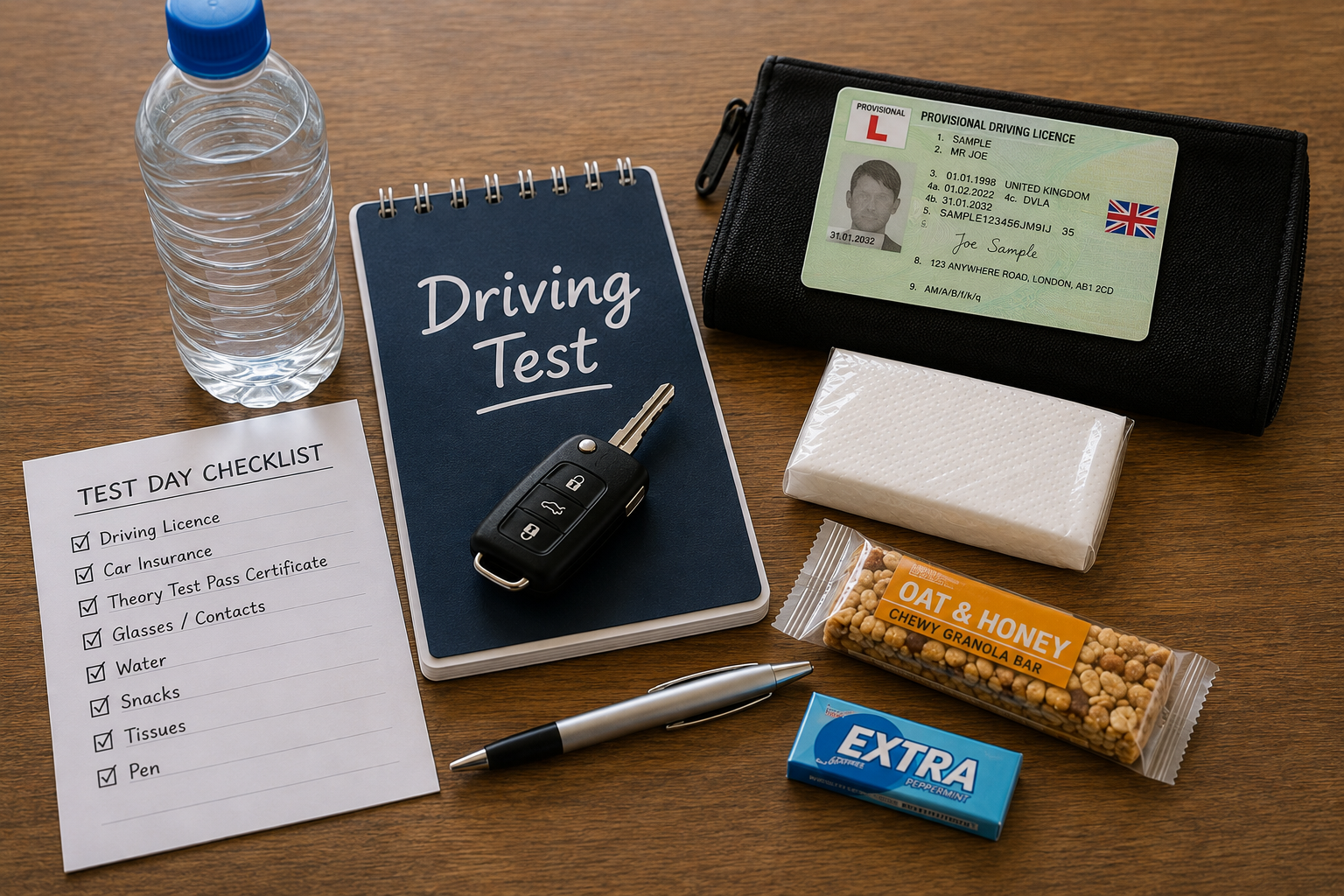
Your simple pre-test checklist should therefore include:
- Provisional driving licence
- Theory test already passed
- Correct test date and time
- Correct test centre
- Suitable car
- Glasses or contact lenses if required
Don’t leave these checks until five minutes before you need to leave.
Driving test checklist: make sure the car is suitable
If you’re taking your instructor’s car, they’ll normally make sure the vehicle meets the requirements.
If you’re using your own car, you need to be particularly careful.
Your car must meet DVSA requirements, including being roadworthy, having suitable tyres, an extra interior rear-view mirror for the examiner, an appropriate passenger seatbelt and head restraint, L-plates, and a speedometer that shows mph. Read our guide to find out exactly what the Car Test Requirements are for the driving test.
It also needs to meet the relevant requirements for tax, insurance and MOT where applicable.
That’s one reason using your instructor’s car can make test day simpler.
The night before your driving test
You don’t need to spend the entire evening revising.
A car that doesn’t meet the requirements can result in the test being cancelled and you having to pay again.
In fact, trying to cram everything in at the last minute can leave you more anxious.
Instead, use your driving test checklist to make sure the practical things are sorted.
Check:
☐ Test time
☐ Test centre location
☐ How you’re getting there
☐ Driving licence
☐ Glasses/contact lenses
☐ Suitable clothing and footwear
☐ Car is ready
☐ Show me, tell me questions reviewed
☐ Phone charged
☐ Alarm set
If you’re using your instructor’s car, agree where and when you’ll meet.
Then get some sleep.
You don’t need to wake up at 4am and read the Highway Code until your eyes stop focusing. Your brain has already done the heavy lifting.
On the morning of your driving test
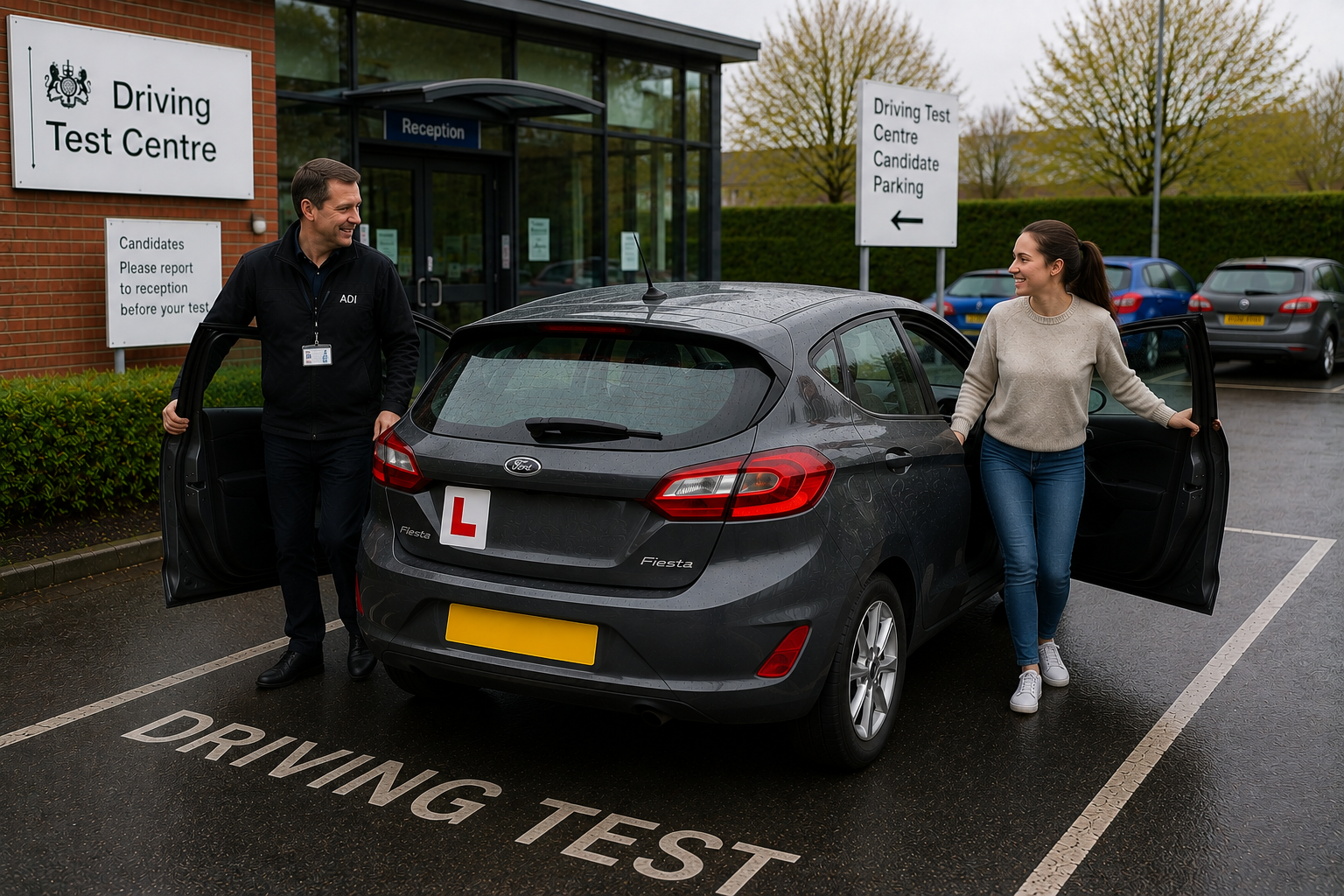
Try to keep the morning as normal as possible.
Eat something if you normally eat breakfast, give yourself plenty of time and avoid rushing.
Arriving early is useful because it gives you time to settle yourself before the test starts. The Ready to Pass guidance recommends arriving at the test centre five minutes before your appointment.
If you’re nervous, that’s completely normal. If test nerves are something you’re worried about, our guide to Driving Test Nerves has more practical ways to stay calm before and during your test.
You don’t need to make the nerves disappear. The goal is to drive safely despite feeling nervous.
Before starting, take a few slow breaths and remind yourself that the examiner isn’t looking for perfection. They’re assessing whether you can drive safely and responsibly.
What happens when the test starts?
The practical driving test has four main parts:
- Eyesight check
- Show me, tell me vehicle safety questions
- General driving ability, including independent driving
- Reversing your vehicle
You’ll drive for around 35 minutes.
After the eyesight check and initial questions, you’ll begin the driving part of the test.
You may be asked to pull over and pull away during the test, including a normal stop, pulling out from behind a parked vehicle and a hill start.
You might also be asked to carry out an emergency stop.
What happens during the test – GOV.UK
Don’t panic if you make a mistake
This deserves a place near the top of every driving test checklist.
Making a mistake does not automatically mean you’ve failed.
It can help to understand how driving test faults are assessed, so you know what different mistakes can mean during the test.
If you take the wrong turning during independent driving, for example, the examiner won’t give you a fault simply because you went the wrong way. They’ll help you get back on route.
The important thing is how you deal with what happens.
A small mistake can become a much bigger problem if you panic and stop concentrating on the road.
If something goes wrong:
Acknowledge it, deal with it safely and carry on.
Don’t spend the next five minutes replaying it in your head.
Independent driving
You’ll drive independently for around 20 to 35 minutes.
Depending on the test, you’ll follow directions from a sat nav, traffic signs, or a combination of both. The examiner provides and sets up the sat nav, so you don’t need to bring your own.
The important thing isn’t remembering a route.
It’s showing that you can:
- Plan ahead
- Read signs
- Make safe decisions
- Choose appropriate speed
- Use mirrors effectively
- Deal with hazards
- Continue driving safely when you aren’t being given constant instructions
If you miss a direction, don’t panic.
The examiner can give you further directions.
What are examiners actually looking for?
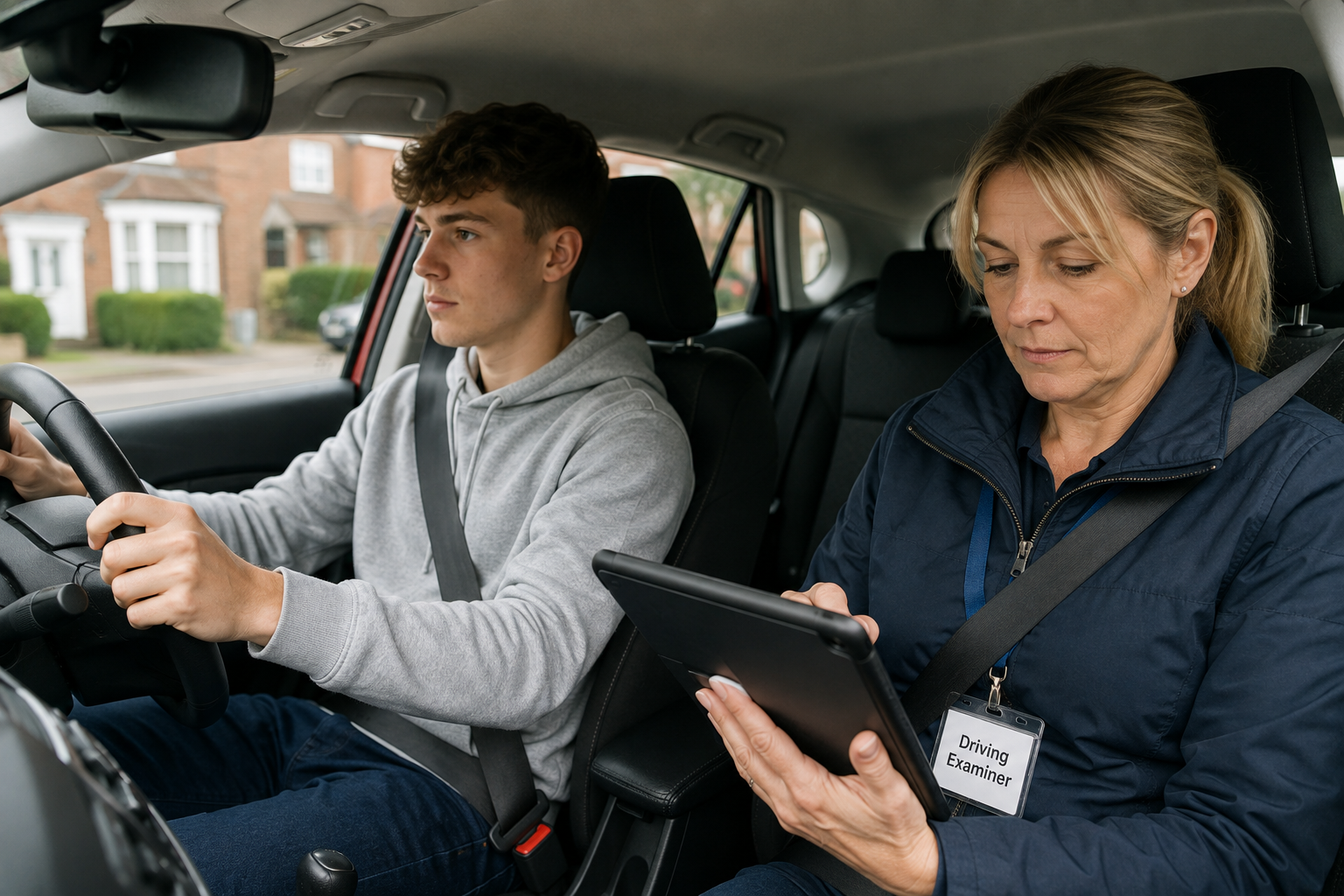
Your examiner is assessing whether you can drive safely and responsibly.
They’ll be looking at things such as:
- Effective observation
- Appropriate use of mirrors
- Safe speed
- Good road positioning
- Appropriate signals
- Control of the vehicle
- Planning ahead
- Response to hazards
- Appropriate judgement
- Independent decision-making
You don’t have to drive exactly like your instructor.
You need to demonstrate safe, competent driving.
What if you get a minor?
You can still pass with driving faults.
The official pass requirement is 15 or fewer driving faults, with no serious or dangerous faults. Driving test faults – GOV.UK
A driving fault isn’t necessarily something that puts anyone in danger. However, repeatedly making the same type of mistake can become more serious.
So don’t think:
“I’ve got a minor, I’ve failed.”
You haven’t.
Get your head back into the drive and continue.
One mistake doesn’t decide the whole test.
Final driving test checklist
Before you leave for your test, run through this list:
Your preparation
☐ You’re consistently driving at test standard
☐ You’ve practised independent driving
☐ You’ve practised different road types
☐ You’ve practised all the reversing exercises
☐ You know your show me, tell me questions
☐ You’ve practised dealing with nerves
☐ You’ve completed mock tests
Your documents and essentials
☐ Provisional driving licence
☐ Glasses/contact lenses if needed
☐ Test details checked
☐ Test centre location checked
Your car
☐ Suitable for the driving test
☐ Roadworthy
☐ Correct tyres
☐ Correct L-plates
☐ Examiner’s additional mirror if using your own car
☐ Appropriate insurance
☐ MOT if required
Your mindset
☐ Don’t expect a perfect drive
☐ Don’t panic over a small mistake
☐ Listen carefully to the examiner
☐ Ask if you didn’t hear an instruction
☐ Keep looking well ahead
☐ Make safe decisions
☐ Focus on the road, not your result
Final thoughts
A good driving test checklist isn’t about trying to control every single thing that might happen during your test.
You can’t.
You don’t know exactly which roads you’ll drive on, which manoeuvre you’ll get or what situations you’ll encounter.
What you can control is your preparation.
If you’ve built enough experience, practised independently, understand what’s expected and arrive with everything you need, you’re giving yourself the best possible chance of showing the examiner that you’re ready.
And if you make a mistake during the test, don’t let it take over the rest of your drive.
Deal with it safely, reset your focus and carry on.
That’s what good drivers do.
Want more help preparing for your practical test? Read our driving test tips guide for practical advice on giving yourself the best chance of passing.
More driving test help
Check the latest official GOV.UK driving test guidance