Is the turn in the road tested?
No. The turn in the road is no longer a specific manoeuvre in the UK car driving test. However, it’s still a useful skill to learn because it develops steering control, clutch control, observation and planning.
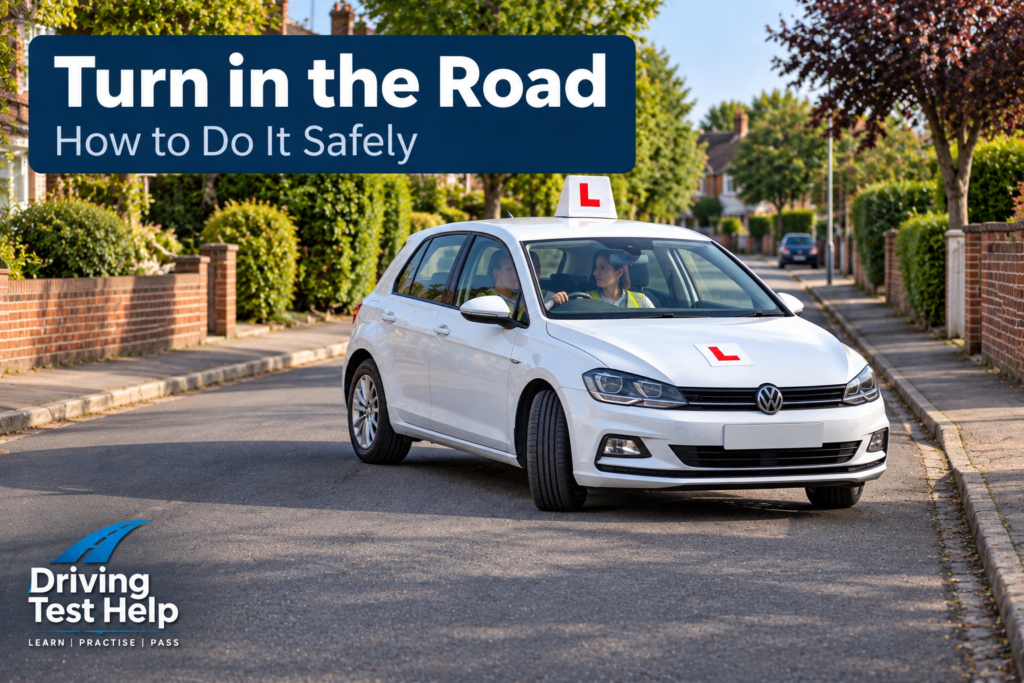
Turn in the Road: How to Do It Safely
A turn in the road is a useful driving skill that allows you to change direction when there isn’t enough room to turn around in one movement. You may also hear it called a three-point turn. Although it isn’t currently a specific manoeuvre in the UK driving test, knowing how to turn your car around safely will be useful in everyday driving, for example if you come across roadworks, reach a dead end or find that a road ahead is blocked.
The turn in the road is no longer a specific manoeuvre in the UK driving test, but it’s still a useful skill to learn for everyday driving and developing good low-speed control.
Is the turn in the road in the driving test?
No. The turn in the road is not currently a specific manoeuvre in the UK driving test.
It was removed from the practical driving test in 2017. However, it remains a useful skill to learn because it helps you develop accurate steering, clutch and speed control, observation and planning.
The important thing is not how quickly you can turn the car around. It is being able to do it safely, under control and with good observation.
How to do a turn in the road
The exact movements can vary depending on the road and the amount of space available. The following method is a useful way to practise.
1. Choose a suitable place
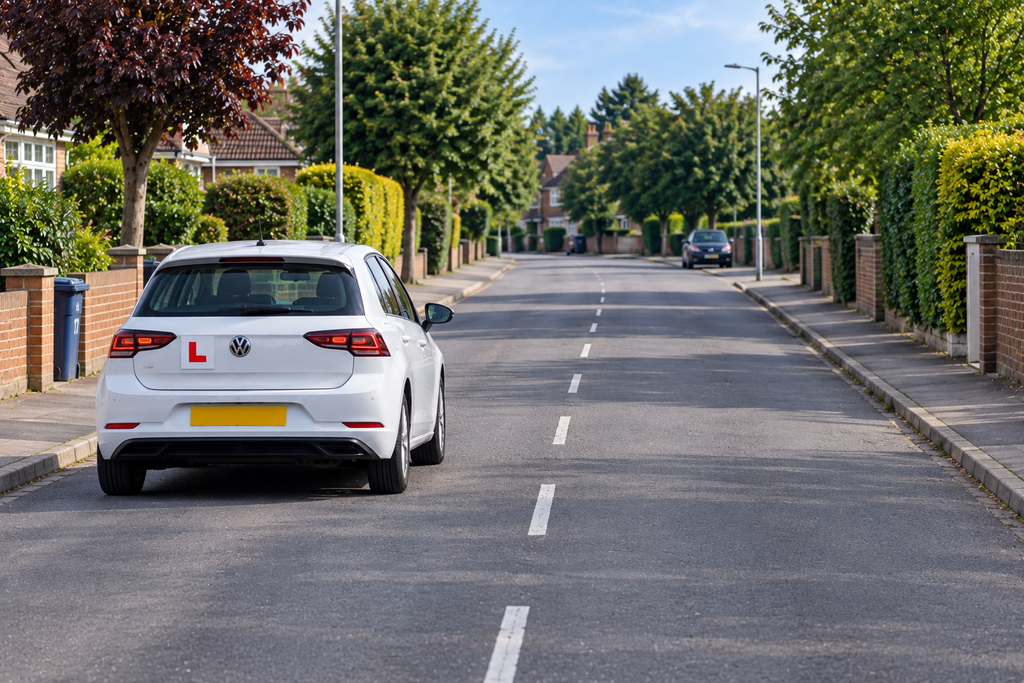
Don’t attempt a turn in the road simply because you need to change direction.
Look for a quiet road with enough space and good visibility. Avoid areas close to junctions, bends, parked cars or other hazards.
Before starting, ask yourself:
- Can I see clearly in both directions?
- Is there enough room to turn safely?
- Are there pedestrians, cyclists or other road users nearby?
- Could another vehicle approach while I’m carrying out the manoeuvre?
If the road is busy or the conditions aren’t suitable, continue until you find somewhere safer.
2. Check all around the car
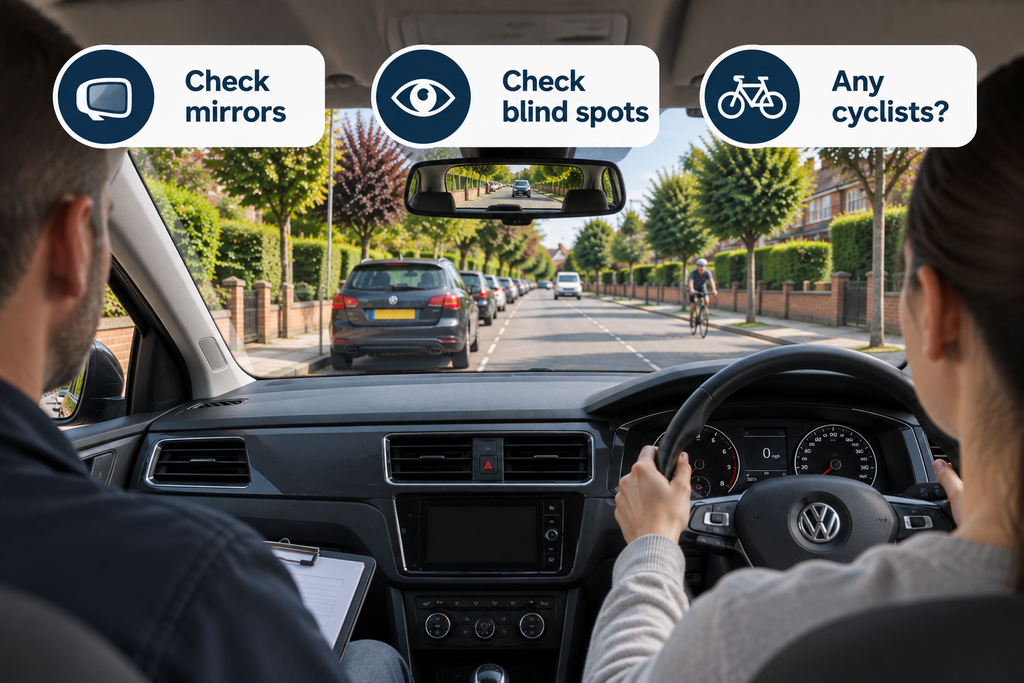
Observation is the most important part of the manoeuvre.
Check your mirrors and look carefully around the vehicle before moving. Remember that pedestrians, cyclists and other vehicles can appear while you’re carrying out the turn.
If anything changes, stop and wait rather than trying to squeeze through.
3. Move forward slowly
Select first gear and move forward at a very low speed.
As you move, steer towards the side of the road while continuing to observe. Keep the car under control and avoid rushing the steering.
If you need to stop, do so smoothly.
4. Stop before reaching the edge
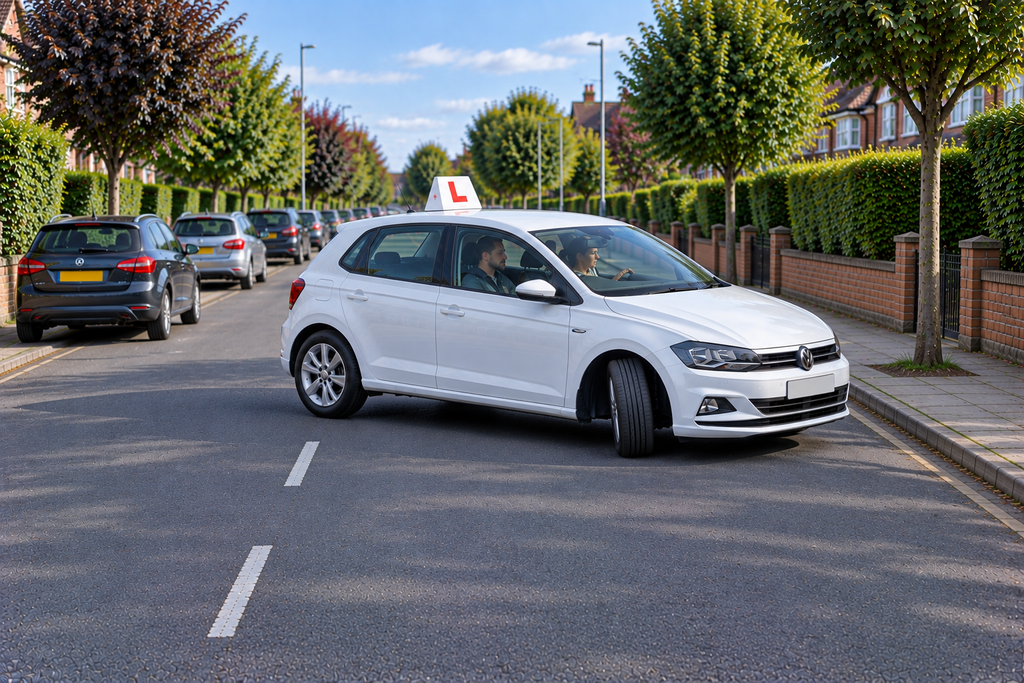
When you have reached a suitable position, stop safely.
Don’t allow the front or rear of the car to mount the kerb. You should have a clear idea of where the car is positioned before selecting reverse.
Apply the handbrake if appropriate and prepare to reverse.
5. Reverse carefully
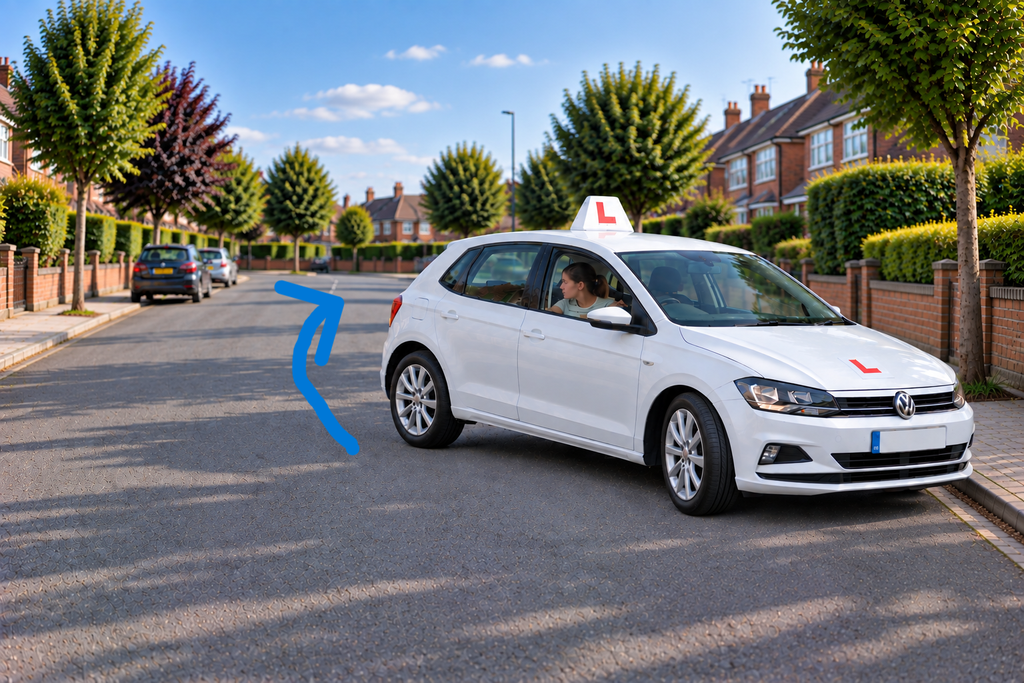
Select reverse and carry out your observations again before moving.
Reverse slowly while steering in the appropriate direction to bring the car around.
Keep checking all around the vehicle. Don’t rely solely on your mirrors. If a pedestrian, cyclist or vehicle approaches, stop and give them priority where necessary.
6. Stop and reassess
Once you have reversed as far as is safe, stop.
You may now have enough room to complete the turn. If not, you can make another controlled movement.
There is no prize for completing the manoeuvre in exactly three moves. Safety and control come first.
7. Complete the turn
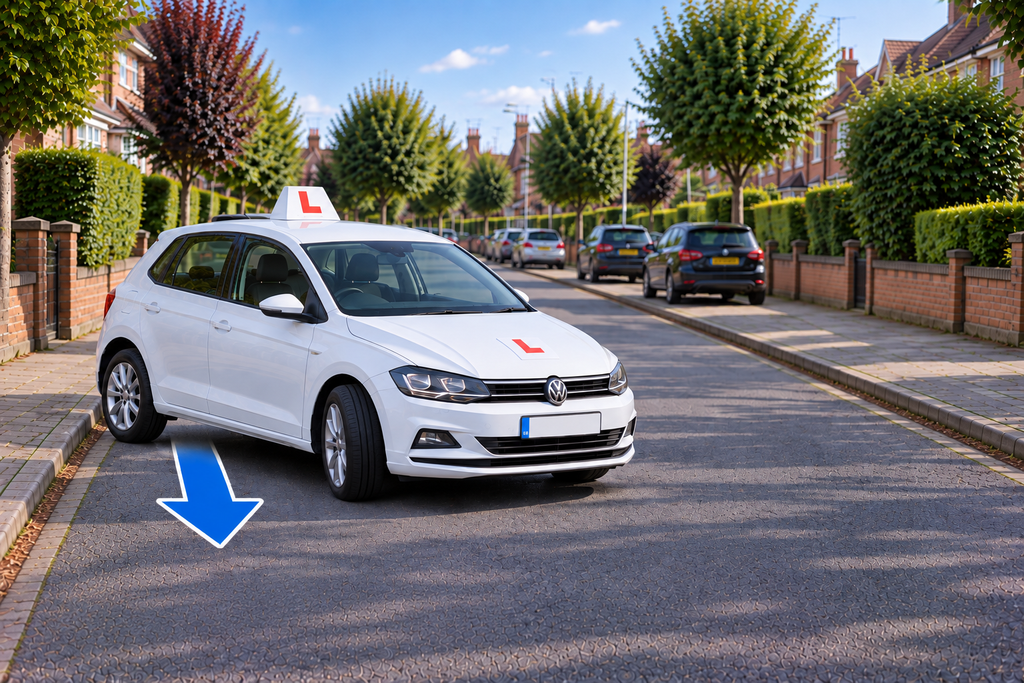
Move forward again and steer into the correct direction of travel.
Straighten the steering as necessary and make sure the car is properly positioned on the road before continuing.
Once you’re travelling in the new direction, check your mirrors and continue when it is safe.
Putting It All Together: Turn in the Road
The turn in the road should be carried out slowly and under control, with good observations throughout. The sequence below shows how the different stages work together from start to finish.
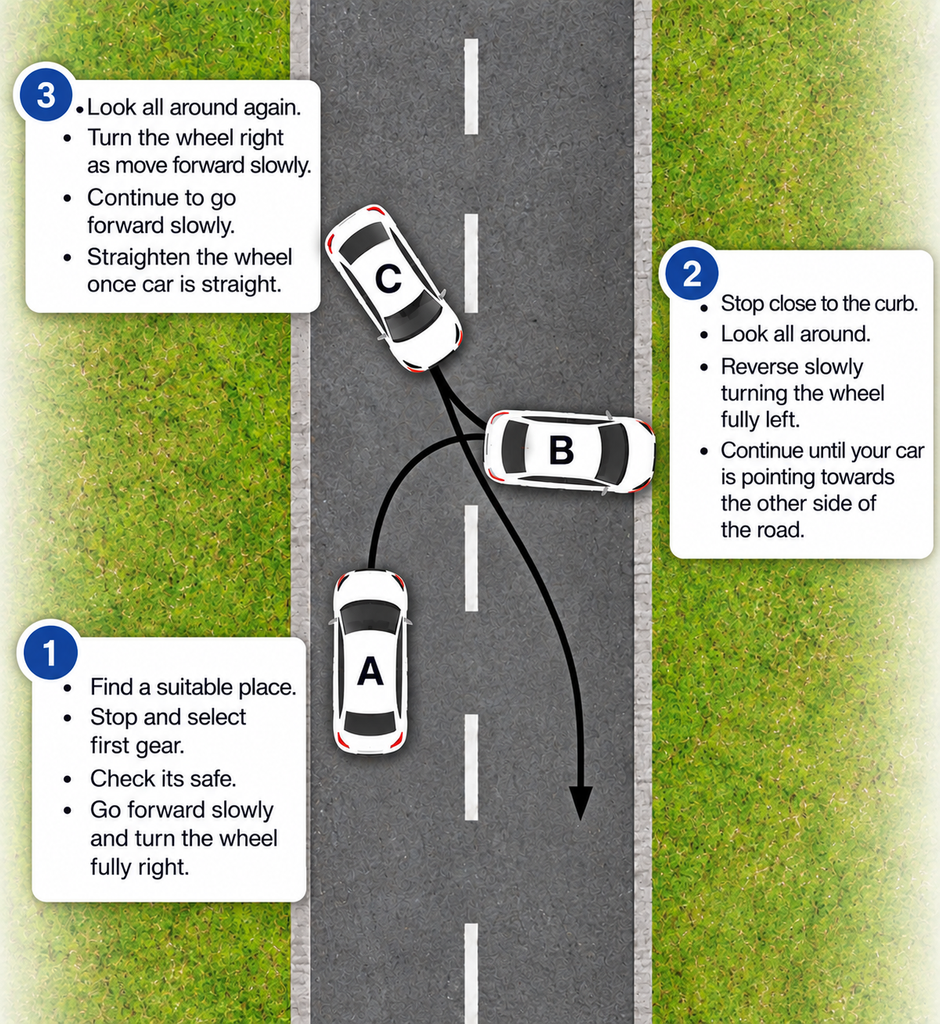
Observation is the key skill
A turn in the road isn’t really about how quickly you can spin the steering wheel.
The important skills are:
- Good all-round observation
- Accurate steering
- Low-speed control
- Knowing where the car is in relation to the kerb
- Planning ahead
- Being prepared to stop
- Giving priority to other road users
If you’re practising with an instructor, they may deliberately introduce different situations so you learn how to make your own decisions rather than simply memorising a set routine.
Common mistakes
Rushing the manoeuvre
Trying to complete the turn quickly can lead to poor observation and loss of control.
Take your time. There is nothing wrong with stopping to reassess.
Forgetting to look around before reversing
A clear road can change very quickly.
Always carry out your observations before moving backwards and continue looking around throughout the manoeuvre.
Getting too close to the kerb
It can be tempting to use every available inch of road.
You don’t need to get extremely close to the kerb. Leave yourself enough room to maintain control and avoid mounting it.
Focusing only on the steering
It’s easy to become focused on where the steering wheel is pointing and forget what’s happening around the car.
Keep your attention moving between the vehicle’s position and your surroundings.
Trying to force the car through
If you realise there isn’t enough room, don’t keep going simply because you’ve started the manoeuvre.
Stop, reassess and make another controlled movement if necessary.
Can you practise a turn in the road on a driving lesson?
Yes. Although it isn’t a specific driving test manoeuvre, practising it can be useful for developing low-speed car control and observation.
Your instructor can help you practise in different road widths and situations, including deciding whether a turn in the road is actually the safest option.
In everyday driving, you may find that turning into a side road, using a suitable junction or finding a larger area to turn around is easier and safer than carrying out a turn in the road.
The ability to make that decision is just as important as knowing how to perform the manoeuvre.
Turn in the road FAQs
Is a turn in the road still tested?
No. It is not one of the manoeuvres currently used in the UK practical car driving test.
Is a three-point turn the same as a turn in the road?
The terms are often used interchangeably. However, a turn in the road does not necessarily take exactly three movements. The number of movements depends on the road and the vehicle.
Do I have to complete a turn in the road in three moves?
No. There is no requirement to complete it in exactly three movements. The priority should be safe control and good observation.
Should I use the handbrake?
Use the handbrake when appropriate for the situation and your vehicle. Your instructor can show you the best technique for the car you’re learning in.
Is it better to use a different way of turning around?
Often, yes. If you can safely use a suitable side road, junction or larger area, that may be preferable. Always consider the road conditions, other traffic and the space available before deciding how to turn around.
More manoeuvre guides
Once you’re comfortable with a turn in the road, it’s worth practising the other manoeuvres and low-speed skills that can come up during your driving lessons.
Want to improve your reversing skills? Our Reverse Around a Corner guide takes you through positioning, steering and observation step by step. Although it isn’t a specific driving test manoeuvre, it’s a useful skill for building confidence when reversing.
Preparing for your practical test? Find out how to Pull Up on the Right and Reverse and Parallel Park safely, including what to look for before starting, how to reverse under control and how to deal with other road users.
And if you’re looking for general advice to help you feel more prepared for test day, take a look at our Driving Test Tips guide, packed with practical advice on preparation, common mistakes and what to expect.
The most important thing to remember
A turn in the road isn’t about performing a memorised routine.
Look, plan, move slowly and keep checking.
If the situation changes, stop and reassess. Good observation and control matter far more than completing the turn in a particular number of movements.
If you’re learning to drive, practising this manoeuvre can help you become more confident with slow-speed control, steering and observation, even though you won’t be asked to perform it as a specific manoeuvre during your driving test.